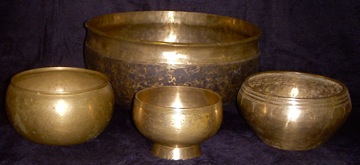
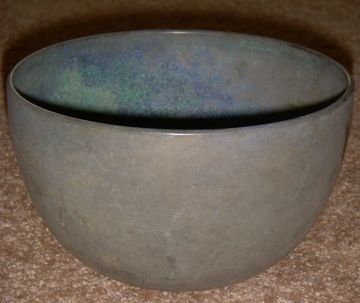
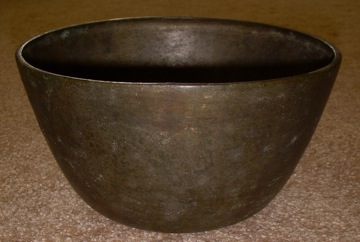
SINGING BOWLS
Home
ASMAT FUE
BERIMBAU
BONPO SHANG
BULLROARER
ERNST CHLADNI
CONCH SHELL
DIDGERIDOO
DRUMS
EAGLE BONE WHISTLE
FEMUR TRUMPET
GONGS
HERMES
ROBERT HOOKE
HUMAN VOICE
HANS JENNY
MBIRA
PYTHAGORAS
RATTLES
SHOFAR
SINGING BELLS
SINGING BOWLS
SPOUTING BOWLS
TINGSHAS
ALFRED TOMATIS
WHISTLING VESSELS
ITEMS FOR SALE
INFORMATION
Sacred Sound Tools

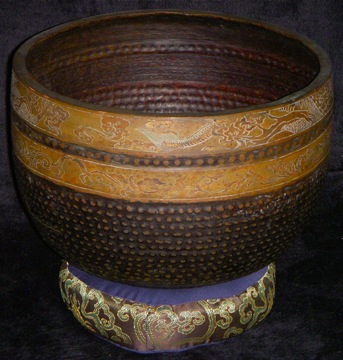
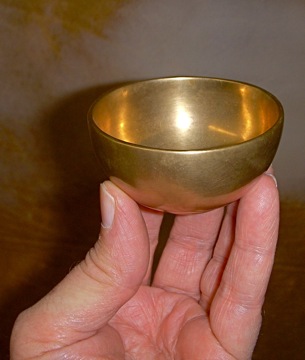
Himalayan Bowls

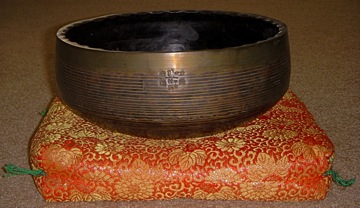
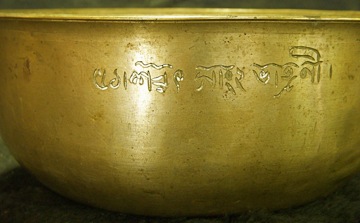
photograph by Al Faaet

This webpage will be reconstructed and updated with new information regarding this subject very soon.
 
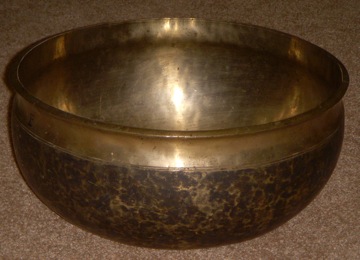
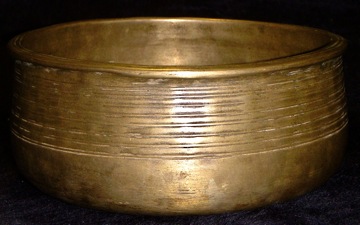
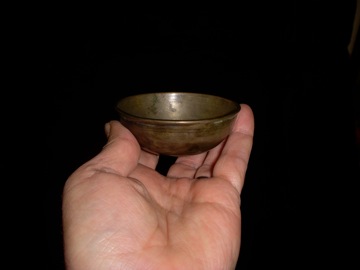
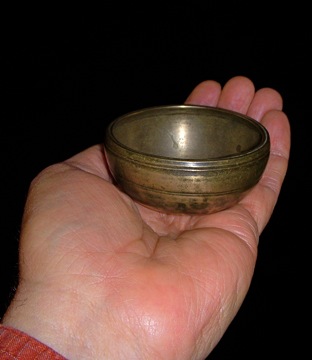
One of the most misunderstood sound tools due to the inaccessibility of reliable information. In an effort to provide information that gives clarity to this subject, an interview with Mitch Nur is being offered.

MITCH NUR is regarded as an authority on Tibetan Metallophones, and has one of the largest private collections of Singing Bowls in North America. This is an excerpt from an interview conducted in 1999 for Dimensions Magazine.

Q: How long have you had an interest in Tibetan Singing Bowls?

Mitch: I first heard Tibetan Bowls in 1973 and in 1975 I made my first trip to the Himalayas in search of them. I have made many trips to the Himalayan region since, but I would say that I have been a student of the Singing Bowls for over a quarter century.

Q: What do we know about them?

Mitch: The first thing is that they are not Tibetan Singing Bowls, but Himalayan Singing Bowls. The bowl culture extends from the Stans ( Afghanistan, Uzbekistan, Tajikistan, etc.) to Burma. The Primary countries are Nepal, Tibet, Bhutan, Sikkim, Mongolia, China, and India. They are not made from a 7 'planetary alloy' but a 3 to 12 metal alloy. Many writers and researchers talk about this 7 metal alloy, but I have never been able to confirm existence of this alloy base or have any of the other writers stated their source for this information. Most people believe that the bowls are Buddhist in origin, this couldn't be farther from the truth. The bowls date back to before Buddhism and were most likely introduced to the Asian continent by the Uighers. The Tang Dynasty annals speak of Gongs being used during the Shang Dynasty. Singing Bowls are a type of resting Gong, and the Mongolian word for a Singing Bowl is 'mon' which means gong. According to sources close to the Dalai Lama, the Buddhists of Tibet place the origin of the Bowls in their culture with the 'fire cults' of pre Buddhist Tibet. The original culture of Tibet is Bon, and the Bonpo were the original alchemists of Asia dating back about 18,000 years ago according to their cultural records. We know that bowl making communities existed within the Ch'iang tribes of Northeastern Tibet, as well as with the Naxi and other groups along eastern Tibet and western China. Nepal produced many of the early bowls and Bhutan has produced many also. There hasn't been a real AUTHENTIC bowl made in about 100 years. The majority of what you see today are fakes.

Q: What do you mean by fakes?

Mitch: Counterfeits, made from a high quality brass imported into Nepal from Assam India. Genuine bowl stock started to dry up about 15 years ago. The marketplace is now flooded with fake bowls, and that is what you see in the shops and stores in the West today. The original bowls were made from a consecrated alloy that contained precious and semi-precious stones as well as the addition of 'sky metal' or meteorite. Their intention was to be used in ritual, healing, as offerings to Deities and Temples, and placed on Altars. Bowls that are made today are intended for profit, and do not contain minerals or meteorite, the alloy is basically a crude B-20 or 'bell alloy'.

Q: Can you still find real Bowls or is it impossible to find them now?

Mitch: Its hard to find real bowls now, however there are collectors who have genuine old stock, and there are still collectors in the Himalayas who find genuine bowls and are not part of the counterfeiting operations.

Q: Explain some of their uses.

Mitch: Sound and Vibration was a science that was studied widely in Egypt, Babylon, Persia, and other early civilizations. Empires and Kingdoms throughout Asia had specific practices, rituals, and ceremonies that involved vibration and sound. The empire that was Tazig, as well as the Kingdoms of Li, Bru-sha, Sumpa, Trom, and ZhangZhung all were involved with sound and vibration in the sense that they developed certain structures within their cultures that used sound and vibration for shamanic healing, sonic anti- gravity, and more. The Bonpo of the Himalayan region has a rich history immersed in sacred sound practices. In fact the Indian sanskrit word Shamballa is used to describe the ancient kingdom of ZhangZhung which was the spiritual home of the Bonpo.

Q: Who were the Bonpo?

Mitch: A Bonpo is a practitioner of Bon. Bon can be translated to mean 'to call', and a Bonpo can be translated to mean 'to recite magical formulas'. They are the spiritual tradition of Tibet. It was a shamanic tradition in Tibet long before Buddhism ever developed. According to their tradition, it was a spiritual path developed by Tonpa Shenrab Miwoche from the land of Olmo-Lungring. He collated the various shamanic practices, outlawed animal sacrifices, and developed a system that still exists today. Buddhism eventually suppressed the Bon, and by the 12th century AD, Buddhism had replaced Bon as the spiritual tradition of Tibet.

Q: What uses did the Bonpo have with the bowls?

Mitch: Research suggests entrainment.

Q: How?

Mitch: Bonpos were the first to use reciting mantras widely throughout their practices. We also know that they were the alchemists of Asia, and used Bowls as part of their Shamanic Healing. Bowls were used in a shamanic practice that utilized this formula, vibration + visualization=Manifestation.

Q: How do quartz crystal bowls fit in?

Mitch: How do you mean?

Q: Can they be used like Himalayan Singing Bowls?

Mitch: Its my opinion that they cannot. The intention of the quartz bowls is not the same as the Himalayan ones. What culture or tradition do they come from? Quartz bowls are a recent invention, a novelty at best. They do have benefit as a meditation aid, but their fundamental note is very strong, and the harmonic nature is diminished. Entrainment works best with a strong harmonic, and the quartz bowls are weak in this area. Plus they break very easily. I would rather have the quartz crystals before they smash and bake them, there is a healing nature to crystals, and turning them into a powder defeats all logic.

Q: How can our readers get in touch with you if they would like to know more about Himalayan Singing Bowls?

Mitch: I can be reached via email at: info@sacredsound.org, or I can be contacted at PO Box 25, Milford Square, PA 18935. I lecture around the country and my schedule is posted on the world wide web at www.sacredsound.org


Buy Singing Bowls here

Buy Genuine Practitioner Quality Bowls here

Click on the Link below to find a Certified Practitioner or Therapist who uses Himalayan Singing Bowls in their practice.

Click here for the USA Directory

Click here to join singingbowls
Click to join singingbowls

copyright 2007 by 9ways